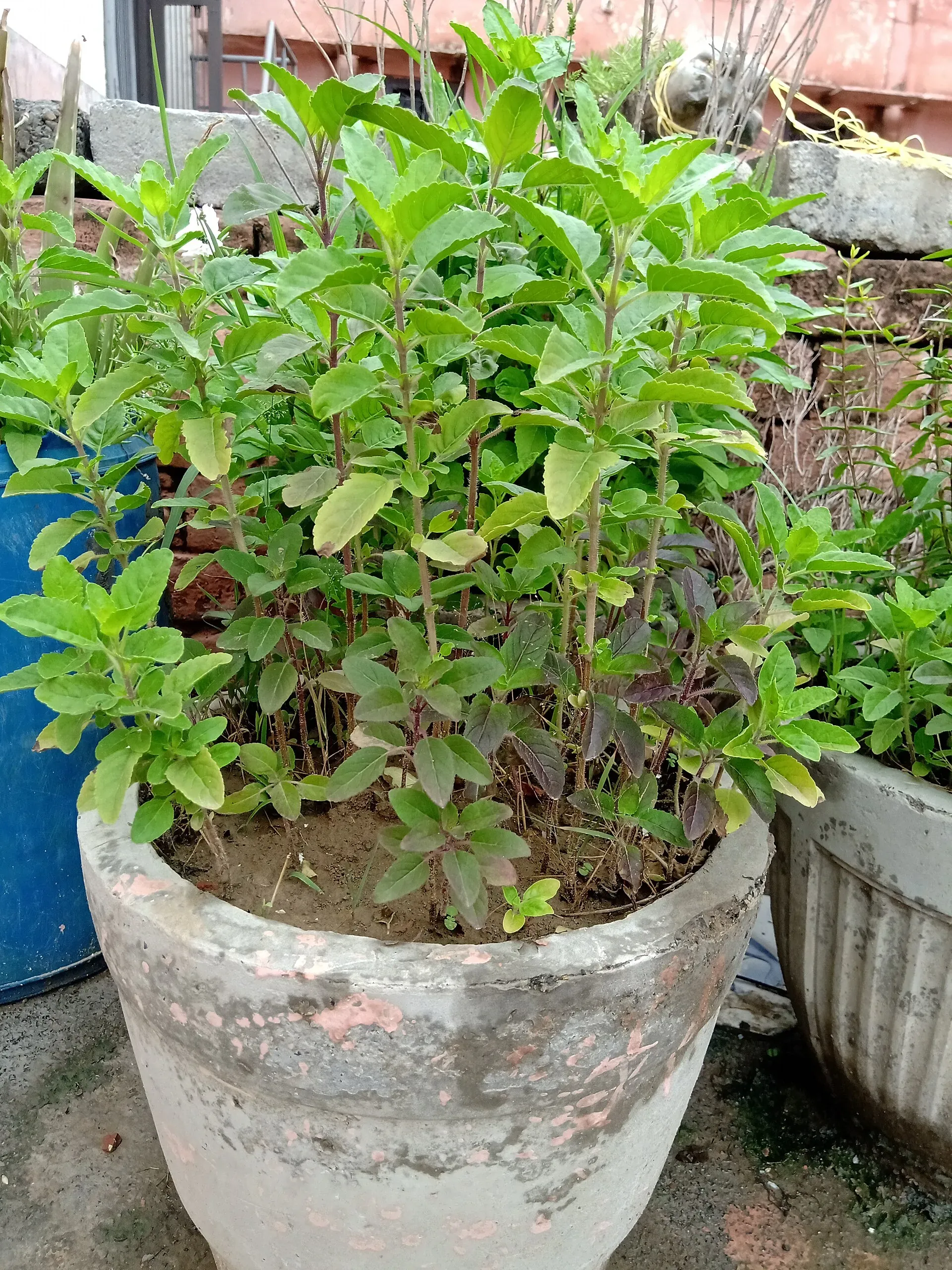
Tulsi, the holy basil, is worshipped as a form of Devi Lakshmi and is especially dear to Lord Vishnu and Shri Krishna. No offering of bhog to Thakur Ji is considered complete without a Tulsi leaf, and a Tulsi plant in the courtyard has been the heart of the Indian home for centuries.
A simple daily Tulsi puja
- After bathing in the morning, offer water to Tulsi with a small lota.
- Light a ghee diya near the plant in the evening.
- Do three, five or seven parikramas of the plant while chanting Om Tulsyai Namah.
- Offer a little kumkum, haldi and a flower, and pray for the wellbeing of your family.
Rules to remember
Tulsi leaves are not plucked on Ekadashi, Sunday or after sunset, and never without first bowing to the plant. Leaves needed for Ekadashi bhog are gathered a day earlier. Water is not offered to Tulsi on Ekadashi, as Tulsi Devi herself observes the fast that day.
Where Tulsi grows, negativity cannot stay.
Caring for the plant
Tulsi loves morning sunlight and well-drained soil. Water it daily in summer but do not let the pot stay soggy, and pinch off the flower spikes (manjari) so the plant stays leafy. In very cold weather, cover it at night. When a Tulsi plant dries, it is respectfully placed in flowing water or buried in the soil, never thrown away.
Tulsi Vivah
On Dev Uthani Ekadashi in Kartik, Tulsi is married to Shaligram, the form of Lord Vishnu. This joyful festival marks the start of the wedding season. The Tulsi mala, worn by Vaishnav devotees, is available from our puja items page.
Image: Holy Basil(Rama,Krishna;Ocimum tenuiflorum).jpg, Diamante Phi, CC BY-SA 4.0, via Wikimedia Commons.