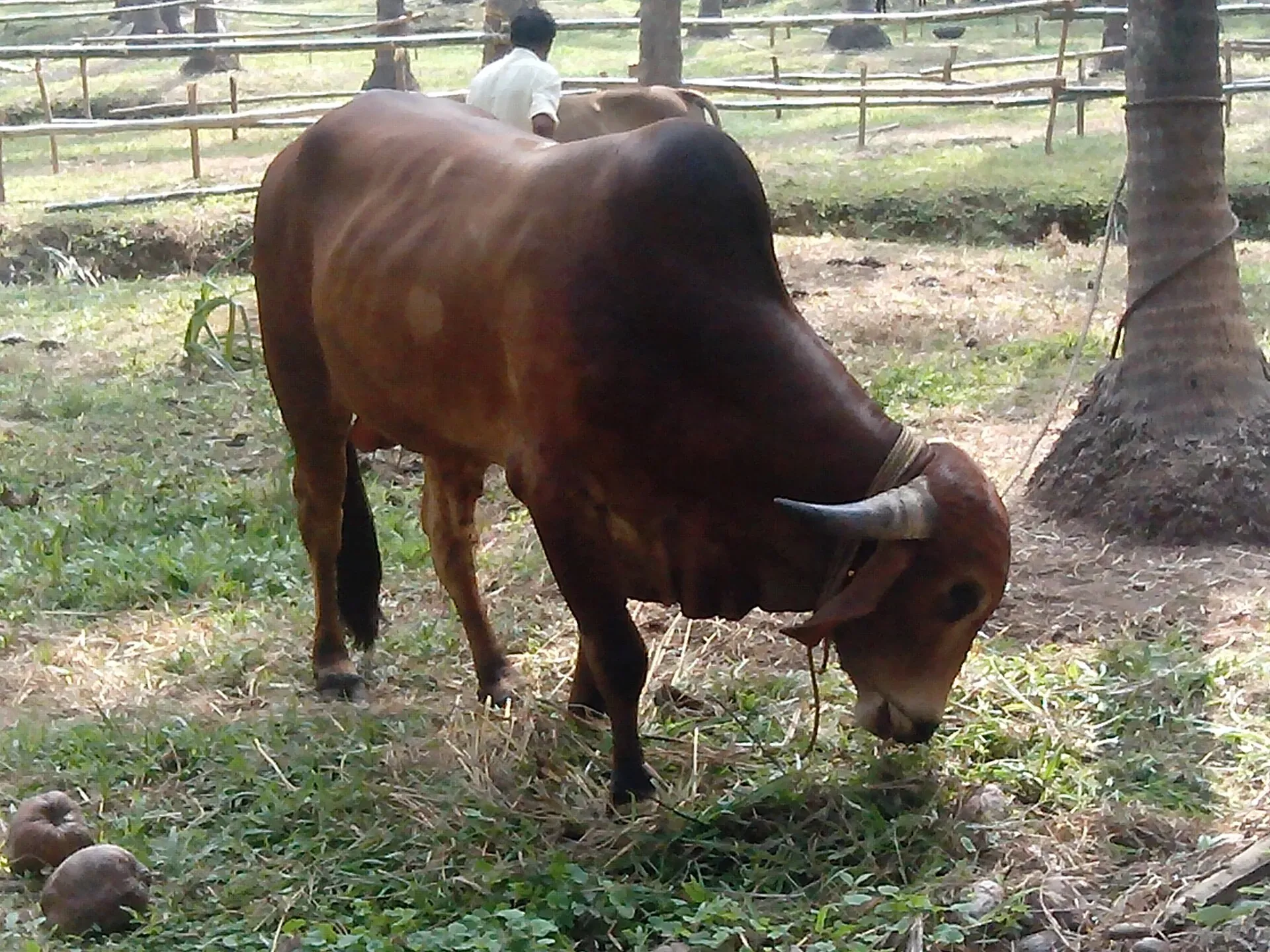
In Sanatan Dharma the cow is not seen as livestock but as Gau Mata, a mother who nourishes without asking anything in return. The scriptures describe her as the abode of all the devatas, and Lord Shri Krishna himself spent his childhood in Vrindavan as Gopal, the protector of cows.
Why the cow is revered
For thousands of years the cow sustained village life in India. Her milk, curd and ghee nourish the family and are offered in every yagya. Her dung and urine enrich the soil and are used in natural medicine. Even the bullock once ploughed the fields. Caring for her is a way of giving back to the one who gives so much.
A home where a cow is served with love is never without the grace of Lakshmi.
What Gau Seva means today
Many cows today are abandoned once they stop giving milk. A gaushala gives these old, sick and orphaned cows shelter, food and medical care for the rest of their lives. Gau Seva is not only about worship; it is the practical, daily work of feeding, cleaning and healing.
How you can take part
- Feed a cow with green fodder, jaggery or a roti before your own meal, as many families do every morning.
- Sponsor fodder or medicine for a cow at a gaushala on your birthday, an anniversary or in memory of an ancestor.
- Choose milk and ghee from indigenous cows raised with care.
- Visit a gaushala with your children so they grow up with compassion for animals.
Our Divine Gaushala
Bhaktyoday Charitable Foundation is building a Divine Gaushala for indigenous cows under the guidance of Vaishnavacharya Shri Dharmendra Vats Ji. Every contribution, however small, helps feed and care for Gau Mata. You can support it from our Donate page.
Image: Gir cow.jpg, Jayan.thanal, CC BY-SA 4.0, via Wikimedia Commons.