Agni is the messenger between humans and the devatas. The very first mantra of the Rig Veda, Agnimile purohitam, praises the sacred fire. A havan carries our offerings to the divine through Agni, purifies the air of the home with the smoke of herbs and ghee, and calms the mind.
What you will need
- A small copper or iron havan kund
- Dry mango wood (samidha) and a few cow-dung cakes
- Havan samagri (a mix of herbs, guggul, sesame and rice)
- Pure cow ghee and a spoon for offerings
- Camphor, matches, water in a lota, flowers, and a cloth seat for each person
The steps
- Purify: bathe, sit facing east, and sprinkle water on yourself and the kund while chanting Om Apavitrah Pavitro Va.
- Sankalp: hold water in your right hand and state your name, gotra and the purpose of the havan.
- Light the fire: place the wood in the kund, light it with camphor, and invite Agni Dev with folded hands.
- Offerings: offer a little samagri with ghee into the fire after each mantra, ending with Svaha. Begin with Ganesh Ji, then the Navagraha, then the Gayatri Mantra 11, 21 or 108 times.
- Purnahuti: offer a dry coconut wrapped in red cloth with the last mantra, then do aarti and ask forgiveness for any mistakes.
Svaha means 'I offer this completely', with nothing held back.
When to call an acharya
A short family havan is a beautiful daily or weekly practice. For Griha Pravesh, Navagraha Shanti, Rudrabhishek or a havan for a specific dosha, the mantras and procedure are longer and should be performed by a trained Vedic acharya. You can book a consultation with Guru Ji for any of these.
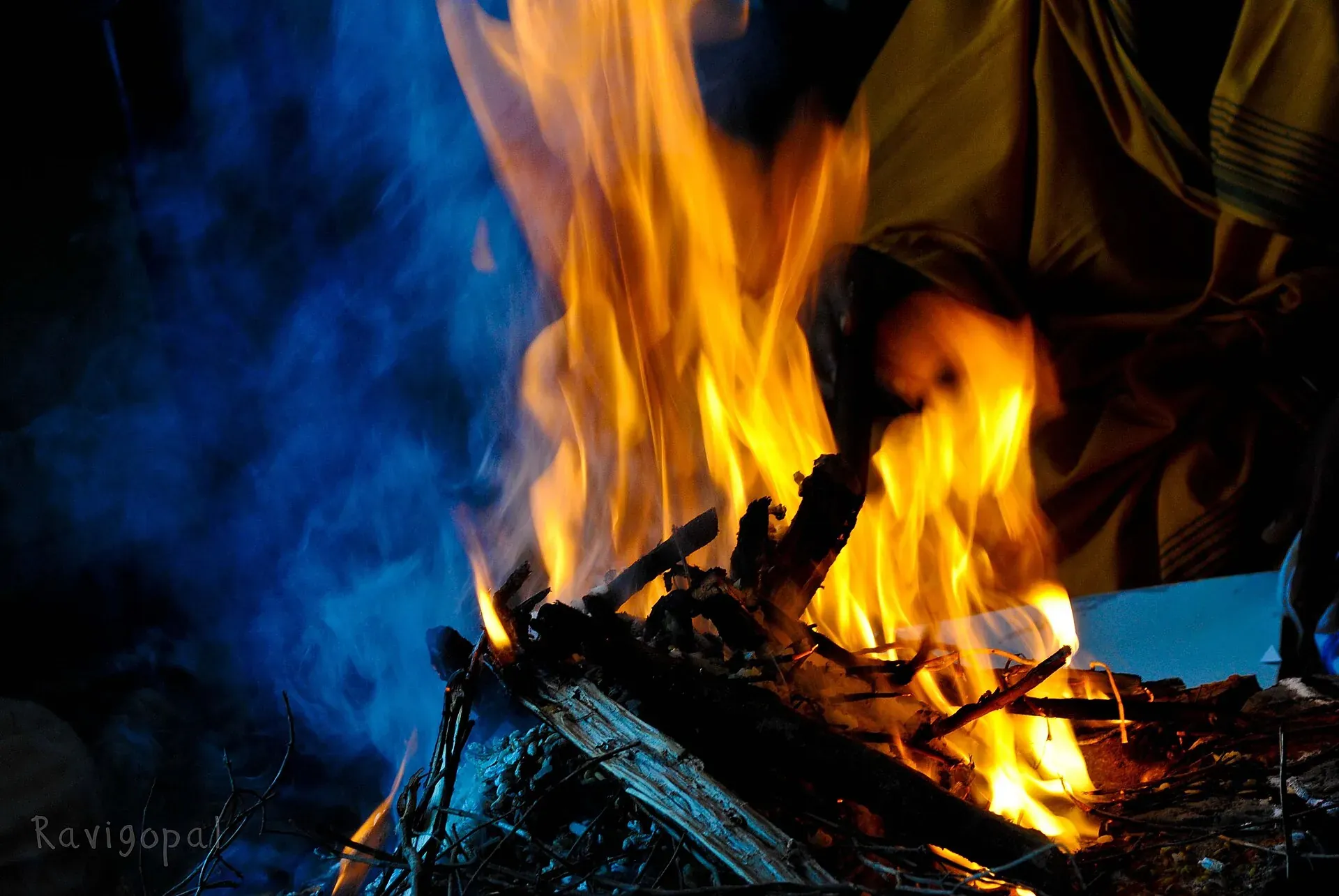
Image: (A) puja fire, Havanam.jpg, Ravigopal Kesari, CC BY-SA 2.0, via Wikimedia Commons.